Gnomes! Stealth Tips
How not to get caught in Gnomes! [Steal & Escape]—awareness, spacing, and teamwork under Homeowner pressure.
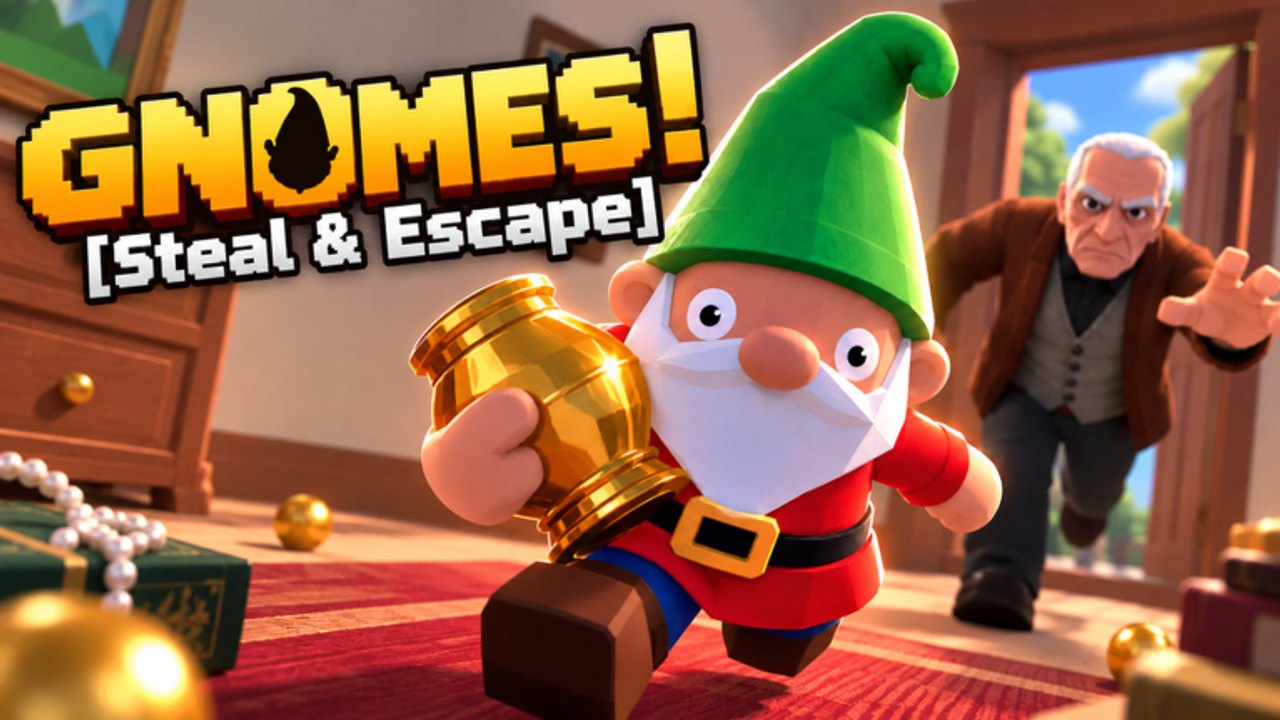
Stealth is the difference between a funny gnome story and a short lobby queue. In Gnomes! [Steal & Escape] you sneak into a house, steal loot, and escape before the Homeowner catches you. Tools, upgrades, quests, and co-op all matter, but none of them help if you keep announcing yourselves at every doorway. This guide focuses on awareness, team roles, and common failure modes—without inventing fake gadget names that may not match the live Sneaky Gnomes build on Roblox.
New to the loop? Read Getting Started first. Already rich but dead? Combine this page with How to Escape.
Stealth is information control
You are not trying to be invisible in a cinematic sense every second. You are trying to control what the Homeowner knows and how much time you spend in risky spaces. Quiet movement, spaced teammates, short exposure across open rooms, and early leaves all reduce information the house can use against you.
Ask three questions on loop:
- Can something see or hear us here?
- If yes, is the reward worth the exposure?
- Where do we go if the answer flips to danger right now?
If you cannot answer question three, you are camping, not stealthing.
Awareness habits that prevent catches
Sound and attention
Treat sudden audio changes, chase stingers, and teammate panic as hard data. Many wipes start with someone saying “it’s fine” over a clear warning. When attention shifts toward the gnomes, shrink your footprint: fewer open doors, fewer stacked bodies, faster path to extract.
Vision and corners
Wide kitchens, stair landings, and long halls are where sneaky plans go to die. Cross them with purpose. Do not afk-loot in the middle of a sightline because the cupboard “has good stuff.” Peek, commit, leave.
Inventory tunnel vision
The most common stealth killer is staring at what you might take instead of where the Homeowner might be. Assign one player—especially in co-op—to watch while others loot. Rotate the watch role so it does not burn out one friend.
Map memory
Even while the game is in active development, layouts teach patterns. After each death, name the room that killed you. After each success, name the route that felt safe. Memory is a stealth tool you already own.
Team roles that actually reduce catches
Online co-op is a core part of the pitch. Use it:
- Watcher: eyes and ears on pressure; minimal looting during spikes.
- Looters: take value quickly in cleared pockets.
- Caller: owns the leave decision; see escape policy in How to Escape.
- Trailer: last through doors; closes the group so nobody is stranded.
You can merge roles in small parties, but you cannot merge them into “everyone grabs everything while nobody looks.” Silence is not stealth if four gnomes are synchronized in the wrong place.
Communication rules
- Call pressure early, not after you are already caught.
- Call leave once, clearly.
- Save arguments for the lobby.
- Ping or describe rooms instead of vague “over here.”
Good calls turn co-op into a force multiplier. Bad calls turn it into a group funeral.
Common failure modes
The parade
Everyone follows the same gnome through every door. One mistake detects four players. Fix: stagger entries, split adjacent rooms, reconverge near extract.
The greed linger
Leave condition hit; someone opens “one more” container in a hot room. Fix: pre-agree that leave means weapons-down on looting unless the item is on the exit path.
The quest magnet
A quest step pulls the squad into the worst space at the worst time. Fix: soft vs hard quest rules from Quests; abort when pressure spikes.
The silent solo
One player splits without telling anyone, gets caught, and the rest walk into the same trap rescuing them. Fix: announce splits; set a timeout after which the team extracts anyway.
The wrong-game guide
Players import habits from Stealing Gnomes or Burglin’ Gnomes and fight imaginary systems. Fix: verify you are in Gnomes! [Steal & Escape] via the Links Hub and ignore foreign “meta” lists.
The broke stealth fantasy
Skipping RELEASE! (125 Coins) and early upgrades that would have reduced catches. Fix: redeem on the Codes Hub, then buy practical power—priority thinking on the Tier List Hub.
Solo stealth notes
Solo play removes friendly fire from bad teammates and removes backup. Leave earlier. Take fewer crossings. Spend Coins on whatever helps you break contact and read pressure. Your watcher and looter are the same brain—swap modes deliberately instead of looting through an alarm state.
Tools and upgrades as stealth multipliers
We will not invent item names. When you unlock something new, test it against a clear question: did my catch rate drop over the next handful of heists? If not, reallocate future rewards. Quests and heist Coins should purchase fewer detections and faster extracts, not only louder cosmetics. Progression context sits in Quests and Getting Started.
A stealth-focused practice loop
- Enter with roles assigned (even solo: watch mode vs loot mode).
- Loot one safe pocket.
- Cross one risky space with a plan.
- Extract on the first hard pressure spike—even if pockets feel light.
- Debrief which failure mode almost triggered.
Repeat until early catches become rare. Only then stretch greed. Patches can change feels—confirm shifts on Updates rather than blaming stealth fundamentals.
Mindset close
The Homeowner is not a random punishment generator. It is the clock and the judge that make stealing exciting. Respect information, space your team, spend rewards on survival power, and leave while the joke is still funny. For the full guide list, return to the Guides Hub.
Steal quietly. Watch actively. Escape on purpose.
Frequently Asked Questions
Quick answers for heists, codes, and upgrades.
What is the biggest reason beginners get caught?
Lingering and stacking after pressure spikes. Fix it with leave discipline from How to Escape and the failure modes on this page.
How should co-op teams split work?
Use watcher, looters, caller, and trailer roles so someone is always reading Homeowner pressure. Beginner co-op setup is also in Getting Started.
Do quests break stealth?
They can, if you force detours during alerts. Use abort rules from Quests and extract first.
Can codes make me stealthier?
Indirectly. `RELEASE!` gives 125 Coins for tools and upgrades that may reduce catches—see Codes and the Tier List Hub.
Are these tips for other gnome Roblox games?
No. They are written for Gnomes! [Steal & Escape] only. Confirm the place through the Links Hub.